
Learn how electric vehicles work and the risks to be aware of
Electric vehicles: five things you need to know
Published on
Written by Police Constable Phil Hackford, Forensic Vehicle Examiner, Wiltshire Police
Going equipped
3 mins read
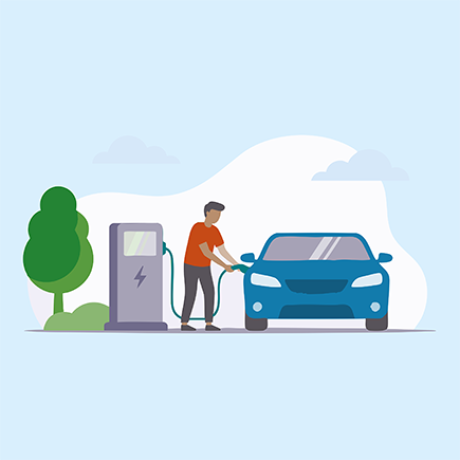
As a forensic vehicle examiner, I am often asked about a wide range of motor vehicle issues. There’s one subject that frequently appears – electric vehicles (EVs).
1. EVs are not new, but their scale is
As with so much in life, it’s all been done before.
Early electric vehicles appeared in the 1830s. By 1900, 28% of vehicles in the USA were electric. However, EVs had ceased as a viable commercial product by 1920, because of the supply of petrol, which offered longer range and more power.
Today, the global popularity of EVs is growing quickly. Current figures indicate that by 2040, over 80% of new vehicle sales worldwide (of an estimated 98 million) will be some sort of electric vehicle. Reasons for this increase in demand for EVs include:
- lower running costs
- reduced emissions
- contributions towards cleaner air
- achieving climate goals
For policing and public safety, this means that incidents involving EVs will only increase.
2. How to spot an electric or hybrid vehicle
The government vehicle tax checker app can confirm the fuel type of any vehicle.
Other main indicators may include:
- blue badging and wording such as ‘electric’, ‘hybrid’, EV or ‘plug-in hybrid electric vehicle’ (PHEV) on the boot, front wings or grill
- a green panel on the left side of the number plate
- the dashboard display showing a message such as ‘ready’ or a green logo if the vehicle is switched on
- orange cables identifying the presence of high-voltage power (look but do not touch)
3. How EVs work
EVs use a large rechargeable battery (usually lithium-ion) that sends electricity to a motor, which turns the wheels.
Main operational points for responders include the following:
- Unlike petrol and diesel, electricity is odourless and invisible.
- EVs can deliver full power instantly, even from standstill.
- EVs are very quiet and sit silent when switched on.
- EVs should fail-safe if the system has detected anomalies or restraint systems have activated. However, there have been cases where airbags have not activated, systems have remained live and batteries have ignited.
Understanding the basics can help responders recognise any potential hazards.
4. Risks to be aware of
Battery fires
If an EV is badly damaged, the battery may overheat (thermal runaway).
Safety tip: If an EV is on fire or hissing, keep your distance from the vehicle.
Smoke and vapours
Burning batteries will release harmful gases, such as carbon monoxide, hydrogen cyanide and hydrogen fluoride.
Safety tip: Avoid inhaling smoke or vapour, stay upwind and move others away.
Electricity
Modern EVs are designed to shut down. However, severe damage or exposed wiring could pose a shock risk.
Safety tip: Do not touch damaged components. If you must touch the vehicle, use one hand only, with the other in a pocket to reduce risk. Electrocution is rare, but the precaution is simple.
5. What you can do safely
Without the necessary equipment, the safest option is always to contact professionals. However, if you come across a broken-down or crashed EV:
- always apply the ‘one hand in pocket’ rule
- turn the vehicle off (ask the driver to do so if possible)
- move the key fob at least 15 metres away
- keep people back, especially from smoke or damaged battery areas
- do not try to repair or disconnect anything
- call emergency services if there is fire, smoke or significant damage
This article was peer reviewed by A/Chief Inspector Nick Lee, Dorset Police.