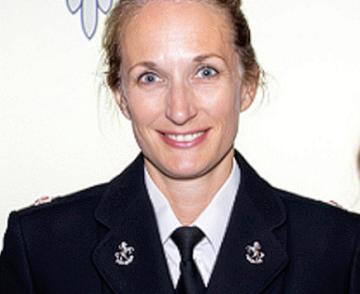
Craig Turner shares what it’s like working as an Opal intelligence development officer focusing on organised retail crime
Diary of an intelligence development officer
Published on
Written by Stephanie Coombes, Head of Intelligence and Craig Turner, Intelligence Development Officer, Opal
Going equipped
4 mins read

Opal is the national intelligence unit for serious organised acquisitive crime. The intelligence team operates as a National Police Chiefs’ Council (NPCC) capability, sitting under Chief Constable Amanda Blakeman’s acquisitive crime portfolio. Main coverage includes:
- burglary
- infrastructure and metal crime
- organised retail crime
- supply chain crime
- robbery
- vehicle crime
Opal’s support to police force and industry partners is extensive. Where there is a cross-border offending series committed by organised crime groups (OCGs), Opal’s intelligence team:
- brings together the full intelligence picture, demonstrating the true threat, harm and risks associated with the OCGs and high-harm offenders involved
- links together siloed investigations across police forces, liaising with and connecting officers in case, and pulling it into a single, strengthened investigation
- supports police partners with a strong intelligence development strategy, including best practice and effective tactics
- liaises with partners throughout the process, including external industry partners and other agencies – such as the Joint International Crime Centre (JICC) and the Tackling Organised Exploitation (TOEX) programme – to ensure that all avenues of investigation are explored
I work as an intelligence development officer (IDO) for Opal, focusing on organised retail crime (ORC). My role centres on researching and developing intelligence on ORC, mainly targeting OCGs. By working alongside analysts in our team, we can help to identify the larger picture of the offences being committed to see the full scale of the OCG.
Monday
I kick off the week by managing my inbox from over the weekend. This usually consists of emails from retailers providing further offences that have recently occurred in relation to my assigned OCGs.
I provide updates on any offender arrests or vehicle stops that have happened over the weekend. This is followed by a team meeting where operational updates are shared. This meeting is led by a supervisor and attended by all thematic desks (for example, vehicle crime, metal crime and burglaries).
This week, I am managing the ORC inbox, triaging emails to the right people to ensure that our stakeholders will receive an effective response. Emails in this inbox can include:
- briefings and bulletins from police and industry partners
- tasking referrals (primarily from industry, but can also be submitted by police)
- strategic data
Tuesday
Today’s the day for researching and developing actionable intelligence. To progress the operations I am working on, I use the policing systems we have available, including (but not limited to):
- Police National Database (PND)
- Police National Computer (PNC)
- automatic number plate recognition (ANPR)
- financial checks
I start first with some PND facial recognition checks. Unfortunately, the CCTV stills I have been provided with are not high-quality enough to return accurate results.
I decide to then search the community resolution notices (CRNs) I have been sent and review the network diagrams of individuals involved. This resulted in identifying a male offender linked to an OCG, as well as two other active members.
An exciting part of my role is getting intelligence to the stage where operational activity can take place. Examples include obtaining warrants from court and undertaking enquiries in the community.
Wednesday
I start the day with a strategic ORC operations meeting. This is where we go through our operations individually, to seek some tactical advice from the supervisor and wider team. These discussions are incredibly useful in identifying different methods to progress operations, as we have a range of backgrounds in the team, including:
- former police officers
- analysts from the prison sector
- colleagues with retail backgrounds
My next task is to draft the first bulletin for my latest operation. I begin by creating a bulletin to send to police forces, followed by a redacted version for industry partners. Both police and industry partners will review these. They can often provide further intelligence around an operation, to enhance our understanding of that particular OCG’s breadth of offending.
Thursday
Thursday mornings are our opportunity to attend the management of risk in law enforcement (MoRiLE) clinic. This helps us to accurately assess the risk and harm of an operation we are working on. It provides a score for our operations, which helps with prioritising our work.
In the afternoon, I focus on vehicles linked to my latest operation. By cross-searching various offences across the UK, I manage to identify a possible vehicle registration mark (VRM). Further research on this VRM shows shared insurance details with a previous mission vehicle.
By identifying this second VRM and reviewing the vehicle’s recent travel history through ANPR analysis, this can reveal several potential ORC offences that retailers may have been completely unaware of.
Friday
As the week comes to an end, I check in with the retailers who are affected by OCG offending. Staying up to date with offences can go a long way in staying on top with intelligence gathering.
I then write updates for the retailers to keep them informed with developments and operational successes that we have achieved from the past week. This could be something as simple as identifying a new vehicle, offenders or any operational actions that are being taken that are suitable to be shared.
Sharing updates at the end of the week gives me the opportunity to reflect on the progress made over the previous five days. This ensures that I am prepared to continue developing intelligence effectively the following Monday.
In the first quarter of 2026, Opal’s intelligence development led to the arrest of 250 offenders and the seizure of six vehicles, in addition to the recovery of £3,278 in retail stock and £3.1 million in vehicle parts. The unit identified 124 offenders, 56 vehicles and 28 locations linked to SOAC.
Opal are keen to work with more policing colleagues to tackle serious organised acquisitive crime offences. Please email [email protected] to discuss intelligence and investigative opportunities.
- This article was peer reviewed by Sergeant Chris Chaloner, Business Crime and Crime Prevention, Devon and Cornwall Police