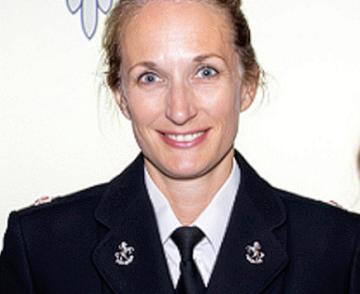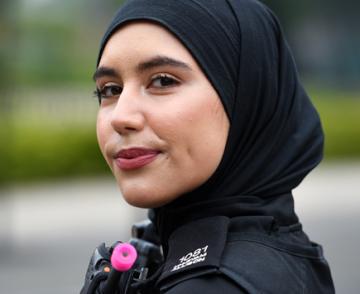
Police sergeants Alastair Twidale and Alex Crisp reflect on their roles as staff officers
A conversation between two staff officers
Published on
Written by Sergeant Alastair Twidale, staff officer to Assistant Chief Constable Matt Boyle, Greater Manchester Police and Sergeant Alex Crisp, staff officer to Assistant Chief Constable Bill Dutton, Cheshire Constabulary
Going equipped
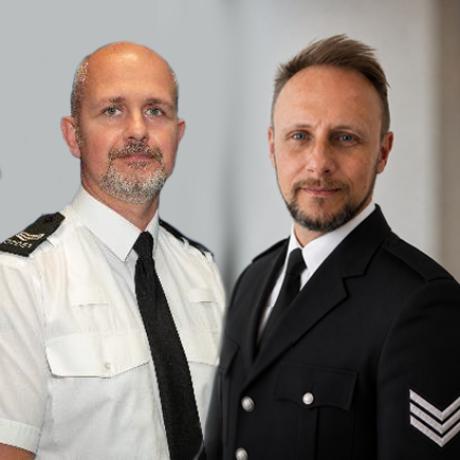
We may come from different forces and different paths, but what we face as staff officers is remarkably similar.
Alastair Twidale (AT): “I’ve been in the role for 11 months now. Before this, I worked in custody and, before that, spent around 15 years on district. I’ve been a sergeant since 2014 and spent my time on response, in neighbourhood and with responsibility for student officers. I also spent time supporting the district command team with project work. My chief officer’s portfolio spans the national response policing portfolio and local policing and prevention within Greater Manchester Police (GMP). This includes response and neighbourhood policing, as well as student officers, so the experience from my earlier roles really helps me to connect with their responsibilities.”
Alex Crisp (AC): “I started the role in July 2025, but my route in was a bit different. I began my policing career in the Royal Military Police, moving to Leicestershire Police then to Cheshire, where I was promoted to sergeant. I also spent four years outside the force working in counter terrorism. I currently work with a chief officer who covers innovation and operational support, as well as holding a national portfolio for the Special Constabulary.
What the role means to us
At its core, the staff officer role is about enabling a chief officer to operate at their best. It means being a sounding board, a critical thinker and a trusted confidant. Equally, though, it’s about understanding the chief officer’s responsibilities and pressures. Our effectiveness comes from our ability to anticipate, prioritise and translate that understanding into meaningful support.
The scale between the forces may be different, but the principles stay the same. Support, challenge, and protect both their time and their thinking space.
AT: “In GMP, there’s 12 people on the chief officer team: the chief constable (CC), deputy chief constable (DCC), a chief resourcing officer (CRO), six assistant chief constables (ACCs) and three assistant chief officers (ACOs). A huge part of my job is working with them, not for them. My goal is to make the working life of the chief officer easier, and that means helping them navigate the scale and complexity of the organisation.”
AC: “For me, the role involves providing sense-checks and offering options, not direction. In Cheshire, our chief officer team is smaller: the CC, a DCC and three ACCs. With a smaller team, chief officers may have to wear more hats.”
No such thing as a ‘typical’ day
If there’s one thing we both agree on quickly, it’s that no two days are the same. You may have underlying structure, but you also have constant change.
AT: “There are mandatory meetings that ACCs must attend, as well as portfolio-specific commitments. Around that, you manage the incoming requests and keep the day workable. You often end up understanding their diary better than they do, while they understand the work better than you. This is why two-way communication is essential. Sometimes, priorities shift instantly and the whole diary must be cleared. That’s just the reality. I work very closely with the ACC’s personal assistant to ensure things can run as smoothly as possible. That team and that relationship is absolutely key.”
AC: “Exactly. You might start the morning thinking the day is neatly planned, then your chief officer becomes gold commander and suddenly everything else moves. One of the most valuable parts of the relationship is the daily check-ins I have with my chief officer. We have more formal check-ins booked weekly, but it’s mostly informal moments whenever they appear. Sometimes it’s over a cup of tea first thing, or in the car between visits.”
AT: “Travel time can be one of the best opportunities for this. Chief officers do make themselves available; you just have to be ready when the moment appears.”
Skills that matter
Adaptability, communication and trust are the foundations of the role.
AT: “Things can, and do, change instantly, so you need to adjust quickly. You also need to speak confidently on behalf of your chief officer to others, both in person and in writing. Trust is everything. The nature of the role means accessing sensitive information, and without that trust, you cannot do the job of a staff officer effectively.”
AC: “You have to be organised, massively so. You’re not just organising yourself; you are organising your chief officer’s world. Confidence matters too. Not arrogance, but the confidence to engage with senior officers and present strong, honest advice. And yes, trust underpins all of it. Without it, the whole dynamic collapses.”
Challenges
AT: “One challenge is managing expectations, whether that’s from the chief officer, or from others who want something from them. You have to protect their time. My chief officer in GMP has ten districts to oversee, as well as a number of branches. You cannot just move a meeting because someone wants space. Their diary often looks like chaos from the outside, but it makes sense once you understand it. You also need the confidence to deliver difficult messages."
AC: “For me, relationships are both the biggest challenge and the biggest asset. You need strong connections with senior officers so that difficult discussions become easier over time. Another challenge is keeping on top of absolutely everything: projects, updates, incidents. Even if you’re not managing something day-to-day, you still need to know about it, so your chief officer isn’t blindsided.”
Highlights
The experience you gain is unmatched. When you return to another role, you’ll understand the organisation better than almost anyone around you.
AT: “The opportunities are incredible. Visiting the Home Office, seeing how national meetings work, travelling across the country, you get insight that most officers never see. It’s surreal sitting in a room with multiple chief officers discussing national policing issues. And when you go back to the ‘real world’ on district, you suddenly understand where messaging comes from and why certain decisions are made.”
AC: “Having spent years outside force, I thought I’d seen a lot, but this role gives you the most complete view of how an organisation works. You understand the levers, the pressures, the constraints and the strategy. I came into this role with specific aims, and I’ve achieved them. You don’t get this level of insight anywhere else.”
Is the role what we expected?
Yes and no. You know broadly what you are stepping into, but the depth of the role only becomes clear once you are in it. People often think the role is tied to promotional aspirations, and it can be. But it’s far more than that. The role is unique and genuinely career-shaping.
AT: “Common misconceptions, like being a ‘bag carrier’, fall away very quickly. If that’s what you expect, you’re in for a shock!”
AC: “Getting the full picture of how our force areas operate has been the biggest surprise. In this role I’ve gained perspective, opportunities and exposure I wouldn’t get anywhere else.”
- This article was peer reviewed by Sergeant Natalie Booth, Staff Officer, Devon and Cornwall Police