
Practice note: improving custody environments for children and young people
Children and young person custody project
Published on
Written by Police Constable Sarah Rolland, Cumberland Youth Justice Service and Sergeant Mark Foster, Cumbria Constabulary
Going equipped
4 mins read
The children and young person custody project has been developed by the child-centred policing team at Cumbria Constabulary, in collaboration with youth justice services (YJSs) across Cumbria.
Background
The initiative began when we designed a training module focusing on adverse childhood experiences (ACEs) and childhood trauma for newly recruited student officers. This foundational work led to a broader review of custody suites across the force. This review revealed that existing environments were not sufficiently trauma-informed or suitable for children.
Children and young people (CYP) entering police custody are, first and foremost, children and must be treated accordingly. Data from Cumberland YJS (2025) revealed that 74% of children open to the service had experienced trauma, which can manifest in complex or challenging behaviours. A negative custody experience risks compounding existing trauma and can adversely affect both the individual and the wider criminal justice process.
The wellbeing and engagement of CYP must be prioritised. Creating a calm and regulated environment can enhance cooperation, evidence gathering and investigative outcomes, while improving the custody experience for all involved. Steps may include:
- ensuring that CYP have time outside the cell
- meaningful engagement with appropriate adults
- provision of age-appropriate distraction items and information
Feedback was gathered from CYP currently engaged with YJSs and youth groups supported by Cumberland Council. These perspectives played a vital role in informing the development of the project.
CYP designed artwork for a feature wall in custody cells with YJS staff. During the design process, approval was sought from Dignifi Ltd, which specialises in trauma-informed practice. This was to ensure a more psychologically informed environment for children, meaning that consideration of their psychological needs was central to the design.
Research was also conducted into other police forces across the UK that had successfully implemented child-first approaches in custody settings.
Project focus and aims
The overarching objectives of the project include:
- ensuring that CYP remain regulated and calm during their time in custody
- increasing engagement and cooperation with CYP
- reducing incidents of assault on staff
- minimising self-harm among detainees
- improving outcomes for victims
- strengthening relationships between CYP, police and the wider criminal justice system
This initiative reflects a commitment to safeguarding vulnerable children, by ensuring that custody environments are psychologically informed, child-focused and conducive to positive engagement.
What we are doing
The project is currently operational in four custody suites:
- Carlisle
- Barrow
- Workington
- Kendal
The project introduces a range of measures that are trauma-informed and sensitive to neurodivergence, including the following:
- Two CYP custody cells in each suite, decorated in designs based on local landmarks and painted in neurodivergent-friendly colours. These spaces are intended to support emotional regulation for individuals with trauma or neurodevelopmental conditions. Chalkboards have been put into the cells to explain custody processes and/or to use as a creative outlet. Any signage that could potentially be triggering has been removed.
- Distraction and sensory items placed in cells to support regulation and engagement. These include fidget toys, fact books, therapeutic squash balls, disposable eye masks and ear defenders.
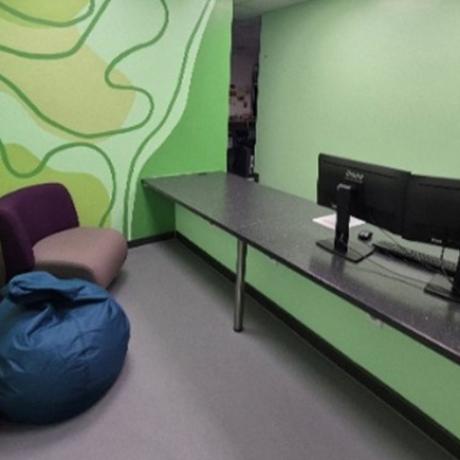
- Designated CYP interview and engagement rooms thoughtfully redesigned to provide a more welcoming, child-focused environment. Each space has been decorated with soft furnishings, such as beanbags, to help facilitate positive interactions during interviews and engagement.
- Updated custody procedures, such as:
- an animation video shown on a tablet, explaining to CYP what to expect during their time in police custody
- a custody shutdown protocol for CYP bookings and movements, minimising exposure to adult detainees
- prioritisation of child-friendly bail times to reduce schooltime bail answers
- Liaison and diversion service engagement is prioritised in CYP cases, to clarify medical history and to identify any needs relating to neurodivergence.
- New CYP custody leaflets, including:
- a booking-in leaflet, which explains the custody process and introduces important personnel
- an exit leaflet, which outlines the disposal decision, provides signposting to support services and includes a QR code for feedback
- Engagement with appropriate adults who can engage with CYP in the designated engagement room while the investigation is progressed.
- Training for all custody staff on ACEs and childhood trauma is delivered either in person or through pre-recorded sessions, complementing the training provided for new student officers. In addition, local defence solicitors are also offered training on ACEs, trauma-informed practice and out-of-court resolutions.
The Barrow custody suite will feature a dedicated booking-in and booking-out desk specifically for children and young people, further enhancing the child-first approach.
Feedback
The project has received widespread recognition and positive feedback from professionals across policing, academia, healthcare and youth justice sectors. Direct feedback included:
- “It felt livelier and much nicer. The old cells were horrid and dull.”
- “The cell was very nice and calming, made him feel safe. He chose to read the books out of the box”
- “He and his worker both said how much better it had been in custody for him compared to previous times. He spent the whole time with his appropriate adult (AA) playing games after some panic about going in a cell from previous trauma in another force’s custody unit.”
To date, nine duty solicitors in Carlisle have attended training on child trauma, ACEs, neurodivergence awareness and out-of-court resolutions. This has received positive feedback, which highlighted the relevance and impact of the content.
Outcomes
Since the project has been implemented in the Carlisle and Barrow custody suites, we have also observed a number of positive quantifiable outcomes. At the time of writing, the Workington and Kendal suites had not been operational for long enough to make comparisons.
These positive outcomes included:
- a reduction in the number of use-of-force submissions recorded for CYP in Carlisle custody
- a reduction in CYP detention times in Carlisle and Barrow custody
We are unable to confirm a direct link between the project and these outcomes at this stage. However, we will continue to monitor whether this trend continues, including at the Workington and Kendal suites.
- This article was peer reviewed by Stephanie Haslett, Custody Inspector, Surrey Police